What we do
We provide solutions to the climate crisis. We support organisations globally as they accelerate towards Net Zero. From target setting, Net Zero pathways, assurance and footprinting, to policy advice, strategy setting and programme delivery, we seek smarter ways to turn ambition into impact, where sustainability and economic realities go hand in hand. Collaboration is our mode of action, as we bring businesses, governments and financial institutions together to unlock collective change.

Net Zero transition planning and delivery
For businesses, financial institutions or local authorities looking to accelerate their Net Zero journey.
We advise companies, financial institutions, and public sector organisations on their Net Zero transition, supporting them on each step of their journey – from footprinting and risk analysis through to target setting, strategy, financing and implementation.

Product carbon footprint labelling
For individuals or businesses looking for information on product carbon footprints.
Our label verifies that a product or brand has reduced its product’s carbon footprint, or has a comparatively lower footprint than other products. This informs more sustainable purchasing choices.

Market transformation
For governments or organisations looking for market level collaboration and transformation towards a decarbonised future.
We help design, implement and evaluate policies, business models and large-scale projects to meet ambitious carbon reduction targets.
Highlights
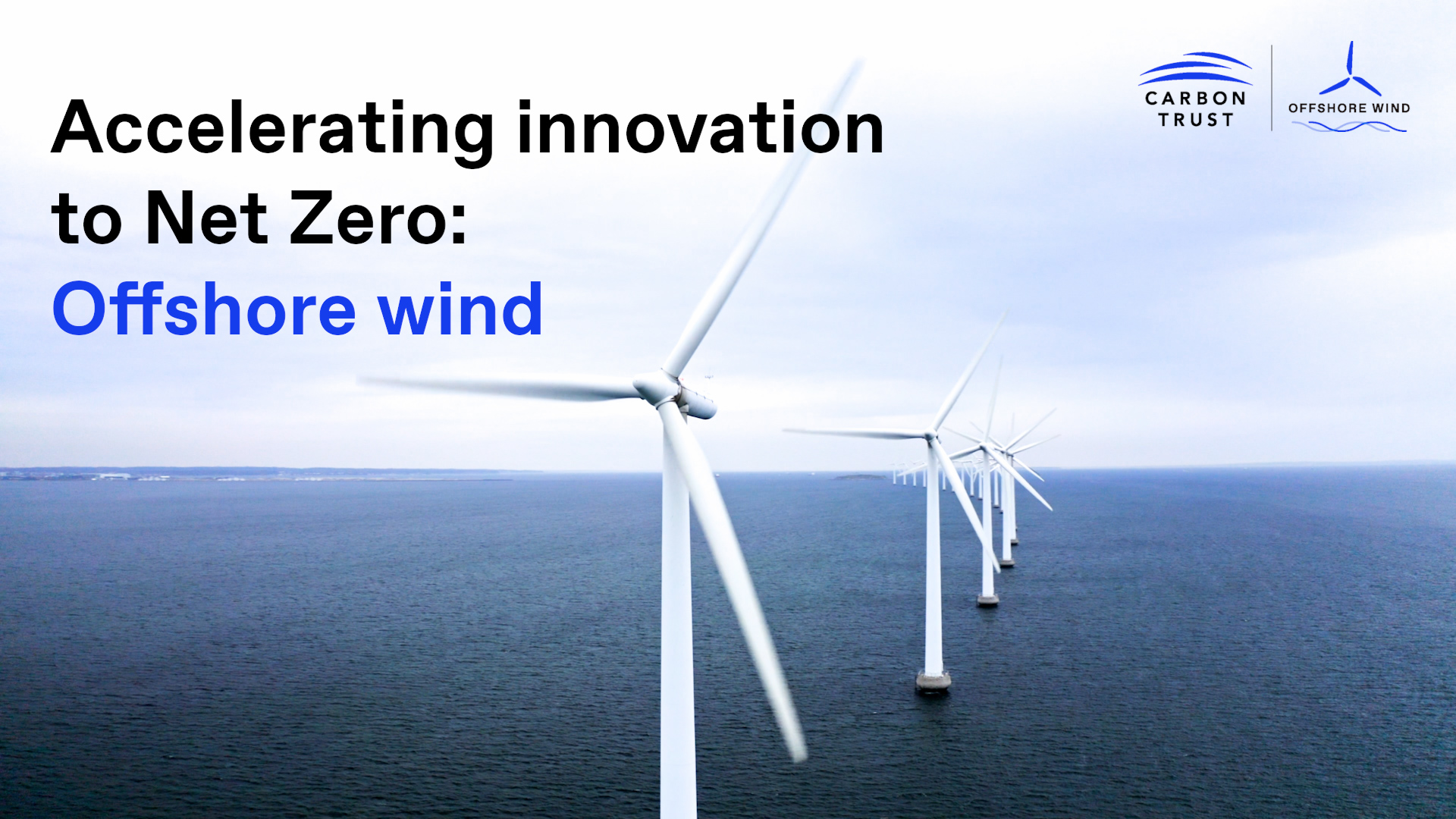
The Offshore Wind Accelerator (OWA) is our flagship collaborative research, development and deployment programme, which aims to reduce the cost of offshore wind, overcome market barriers, develop industry best practice and trigger the development of new industry standards.
Find out moreWe work with companies to help them effectively measure, manage and reduce the footprint of their products.
Product labellingSetting rigorous decarbonisation targets is a crucial step on the journey to a low carbon economy – and shows you are taking strong climate action. We are a global leader in helping organisations set goals aligned with the internationally recognised Science Based Targets initiative.
Target settingA decarbonisation strategy brings together key elements of your Net Zero planning process to provide a high-level framework for how your organisation is going to act on carbon.
Decarbonisation strategy
We have worked closely with the Carbon Trust over a number of years and we are pleased to see our collective efforts come to fruition. Our broader sustainability agenda has developed from energy efficiency in our operations, to carbon, renewable energy, water and waste reduction, through to our supply chain goals.

We sought the Zero Waste to Landfill verification because we wanted to provide traceability, trust, credibility and accountability in the organisation’s waste management, internally and externally, through an international organisation.

We’re proud Virgin Media O2 is one of the first companies in the UK to be recognised by the Carbon Trust for our commitment to achieve Net Zero carbon emissions across our business, operations, and supply chain by the end of 2040.

Working with the Carbon Trust has enabled us to detangle the complexity of our supply chain. Thanks to their scalable model, we now have a much more detailed picture of where we are in meeting Kellogg’s ™ Better Days Promise environmental, social and governance (ESG) strategy climate ambitions. The team's training sessions were especially helpful. We now have a better understanding on where to reduce our supply chain emissions and can factor our calculations into future procurement decisions.